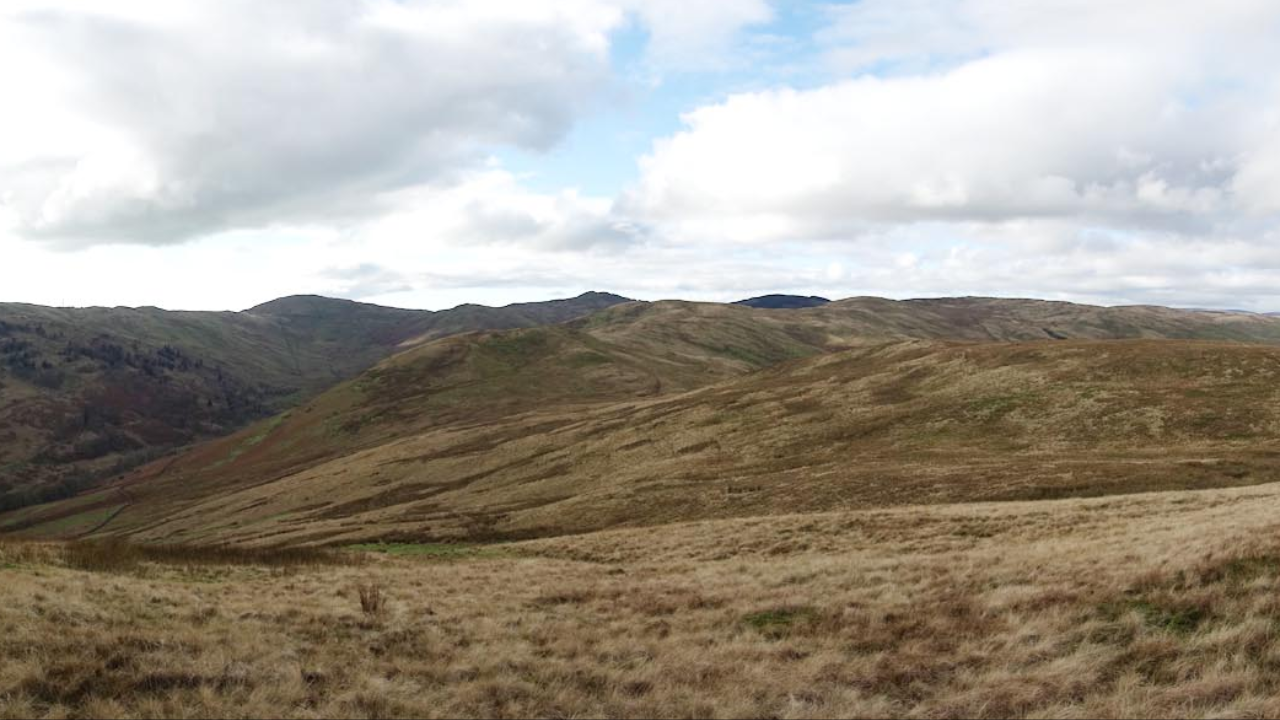
For centuries, sheep and semi-feral ponies chewed Britain's upland fells down to bare, emerald-green carpets. If you walk across the Cumbrian hills today, you might think that empty look is how nature intended it. You'd be wrong. Underneath those sheep-clipped pastures lie dormant seed banks and ancient root systems waiting for a chance to breathe.
That hidden potential sparked an ambitious restoration project back in 2012 on Tebay Common. By putting up fences and keeping livestock away from a targeted slice of the fell, local partners proved something radical. You don't have to force nature from scratch. Sometimes, you just need to get out of its way.
The Birth of Ghost Woodlands at Tebay Common
The project didn't happen in a vacuum. It was forged through a partnership between local farmers, the Lonsdale Estates, and the Woodland Trust, backed by a ten-year government agri-environment scheme. They fenced sheep and semi-feral fell ponies out of 26 hectares of the wider 128-hectare common.
Once the heavy grazing pressure stopped, long-dormant seeds woke up. Ecologists call these revived spaces "ghost woodlands." Peter Leeson from the Woodland Trust noted that bluebells and patches of bracken started popping up, proving the soil still remembered what it was before centuries of intense sheep farming flattened the canopy.
Planting 60,000 native trees across roughly 12 percent of the fell was a massive risk. It was a leap in the dark for local graziers who relied heavily on that land. Yet, by working together to map out important livestock routes and open grazing zones, they made it work without destroying traditional farming livelihoods.
Bringing Back the Birds
You can measure a habitat's health by listening to it. When morning light hits those fenced-off hectares near Tebay village, the acoustic profile of the valley changes entirely.
Ecologist Mike Douglas from South Lakes Ecology runs annual bird surveys across the site. His findings turn conventional wisdom on its head. Since baseline surveys started in 2016, 11 new breeding bird species have moved into the area, bringing the total count to 14 breeding species by 2024. Birds like meadow pipits, reed buntings, and stonechats now call the recovering thickets home.
We are culturally conditioned to view the British uplands as naturally barren expanses. Tebay proves that narrative is false. As saplings mature and form dense understoreys, common woodland birds like blue tits, great tits, dunnocks, and blackbirds are establishing permanent breeding territories.
Flood Management and Farm Viability
Restoring upland ecosystems isn't just about birdwatching or nostalgic tree planting. It tackles real, practical engineering problems like downstream flooding.
Researchers from Lancaster University studying nature-based flood solutions found that the Tebay Common initiative pairs tree planting with peatland drain blocking and leaky wooden dams. These natural interventions slow stormwater down, absorb heavy rainfall, and keep water from rushing into local rivers all at once.
Money talks, and conservation projects fail if local people go broke. The Tebay Common Grazing Association receives £25,600 annually through environmental agreements. This funding covers fence maintenance and compensates graziers for lost forage area. Tim Winder, chairman of the association, points out that farming needs to adapt. Environmental schemes offer a viable economic lifeline for hill farmers facing shifting agricultural subsidies.
What This Means for the Rest of Britain
Tebay Common is a blueprint. It shows that food production and ecological recovery aren't mutually exclusive enemies. When landowners, conservationists, and farmers sit at the same table, you can rebuild complex ecosystems on shared common land.
If you're looking at similar degraded landscapes in your own region, stop waiting for permission from corporate blueprints. Look at the local soil history, talk to the people working the land every day, and start small. Put up the fence, protect the seed banks, and let the landscape heal itself.