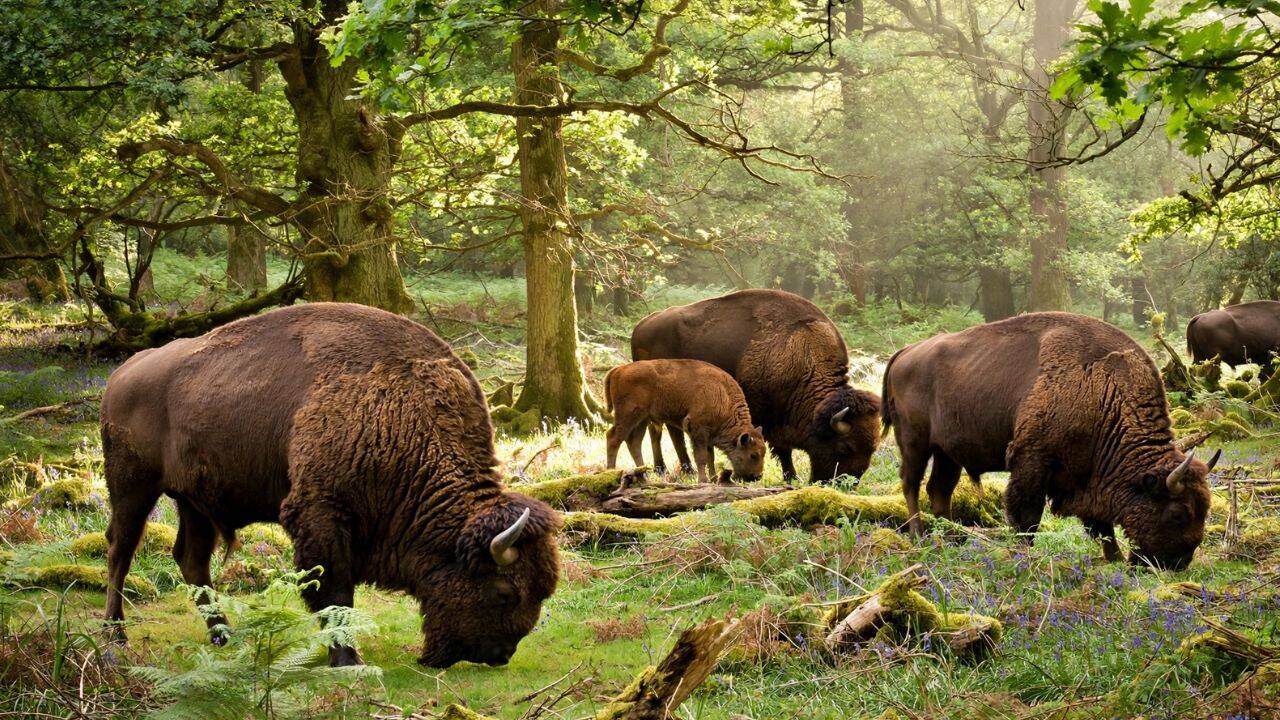
For six thousand years, British woodlands lacked their heaviest, most disruptive architect. That changed when conservationists released European bison into West Blean and Thornden Woods near Canterbury. This isn't just a nostalgic wildlife experiment. It's a fundamental shift in how we manage natural spaces, moving away from passive preservation toward active ecological engineering.
If you think modern conservation is just about planting trees and fencing off areas, you're missing the entire point. Nature doesn't want to be bubble-wrapped. It needs chaos, disturbance, and heavy herbivores to break the monotony.
The Missing Piece in British Ecosystems
European bison vanished from Britain around 6,000 years ago due to habitat loss and hunting. Across the continent, they survived until the early twentieth century before getting wiped out in the wild entirely. When the Wildwood Trust and Kent Wildlife Trust launched the Blean Bison Project back in 2019, critics questioned the wisdom of dropping multi-tonne animals into modern Kent.
They shouldn't have worried. Bison aren't gentle grazers that neatly trim lawns. They are ecological bulldozers.
The herd started taking physical shape in 2022. Four adult bison arrived from wildlife parks across Scotland, Ireland, and Germany. A matriarch came from Scotland, two females from Ireland, and a bull arrived from Germany later that year. Since then, the population has grown through natural births, including a milestone calf born in late 2023 that marked the first wild bison conceived and born on British soil in millennia.
Why Bison Are Ecosystem Engineers
Most people assume forests need quiet protection to thrive. Bison prove the exact opposite. Their daily survival habits actively reshape the landscape in ways machinery or human conservationists could never replicate.
When a bison rubs its massive frame against an oak tree, it strips the bark. This creates standing dead wood, which becomes prime real estate for rare fungi, bats, and nesting birds like woodpeckers. When they roll in the dirt to shed their coats, they create dust baths that turn into seasonal temporary ponds after rain, offering breeding grounds for amphibians and rare insects.
They don't just eat plants; they manage them. Their heavy hooves trample dense bracken, opening up patches of soil where dormant wildflower seeds finally catch sunlight. They act as mobile seed distributors, carrying native flora across miles in their thick fur and digestive tracts.
What Most People Get Wrong About Rewilding
The biggest misconception about projects like this is that you just drop animals into a forest and walk away. In reality, European bison require meticulous monitoring, legal boundaries, and careful herd management. They live in tight social groups, usually led by a dominant female, and their movements dictate the pace of local habitat renewal.
Critics often worry about safety or economic disruption. Yet, the Blean project operates with strict public safety protocols while proving that large-scale ecological restoration can happen right next to populated areas. It forces us to rethink what a healthy forest looks like. A pristine, uniform canopy of trees is often an ecologically dead forest. True biodiversity looks messy, scarred, trampled, and dynamic.
The Future of Natural Woodland Management
Britain's woodlands are facing immense stress from climate change, disease, and historical neglect. Relying solely on chainsaws and human labor to thin out canopies is expensive and unnatural. Bison do that work for free, driven purely by instinct.
Other conservation initiatives across Europe are watching the Kent project closely. When you restore a keystone species, you don't just bring back one animal. You trigger a cascade effect that revives insects, reptiles, birds, and soil microbes that haven't had a proper ecosystem to support them in centuries.
We spent millennia trying to sanitize our natural landscapes into orderly parks. Bringing back the bison is a loud, messy reminder that nature works best when it has room to bite, break, and rebuild itself.