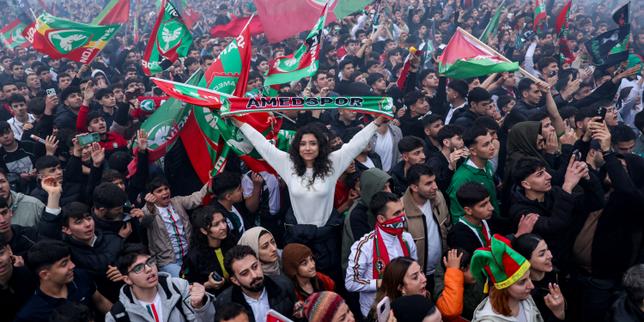
Football is never just a game. When a club becomes a living archive of a suppressed culture, ninety minutes on a grass pitch turns into a high-stakes geopolitical referendum. That is the reality surrounding Amedspor, a team based in Diyarbakır that has transformed from a quiet regional squad into the most scrutinized sports institution in Turkey.
If you want to understand the fragile state of cultural relations and political tensions in the region, don't look at parliamentary transcripts or sterile diplomatic cables. Look at the stands of Amedspor.
The Name That Triggered a National Debate
For decades, the club operated under unassuming municipal names like Diyarbakırspor or local administrative banners. That changed fundamentally in October 2014 when an extraordinary general assembly voted to rename the organization Amed Sportif Faaliyetler Kulübü. Choosing "Amed"—the historic Kurdish designation for Diyarbakır used for centuries—wasn't just a nod to local geography. It was a deliberate public assertion of cultural identity within the official apparatus of the Turkish Football Federation (TFF).
The reaction was immediate and telling. While the name was officially registered, the TFF imposed restrictions on the club's visual identity, objecting to the combination of green, red, and yellow because of their association with Kurdish national symbols. The club adapted by substituting yellow with white, yet the underlying message remained intact. Every matchday became an arena where typography and color choices carried the weight of political defiance.
More Than a Team for the Marginalized
Amedspor doesn't function like a standard professional sports franchise. The club operates under a civic association model, with leadership often drawing from local professional figures, including former bar association heads. Its support base stretches far beyond the city limits of Diyarbakır, commanding hundreds of thousands of devoted followers across Turkey and the global diaspora.
Supporter groups like Barikat and Mor Barikat define themselves through an explicit anti-fascist and inclusive ethos. They view the club as a sanctuary for communities that have faced systemic marginalization, extending solidarity to women's rights, ethnic minorities, and working-class underdogs. When fans fill the stadium chanting slogans like "Kîne em? Kurd in em!" (Who are we? We are Kurds!), they are utilizing a public platform that formal political parties often struggle to secure under tightening legal constraints.
Navigating the Pressure of the National Stage
Achieving promotion into higher tiers of Turkish professional football brought unprecedented visibility—and unprecedented hostility. Away matches frequently expose the team and its travelling supporters to coordinated nationalist backlash, security crackdowns, and stadium bans. Yet, this adversity has only solidified the club's status as a cultural barometer.
When national politicians clash over whether to utter the name "Amed" instead of "Diyarbakır," they are reacting to the cultural footprint the club leaves every weekend. Amedspor's success on the pitch forces mainstream sports media to utter a forbidden lexical item, bringing a long-suppressed identity into prime-time television broadcasts across the nation.
The Unfiltered Mirror of Society
Most sports commentators prefer to pretend athletics exist in a vacuum, completely detached from the messy realities of statecraft and civil rights. Amedspor shatters that illusion completely. It proves that football can serve as an emotional valve for a population seeking dignity, recognition, and visibility when traditional political channels hit a wall.
The club's ongoing journey isn't just about climbing league tables or winning silverware. It's a daily negotiation for space, voice, and existence in a country where identity politics dictates every bounce of the ball.