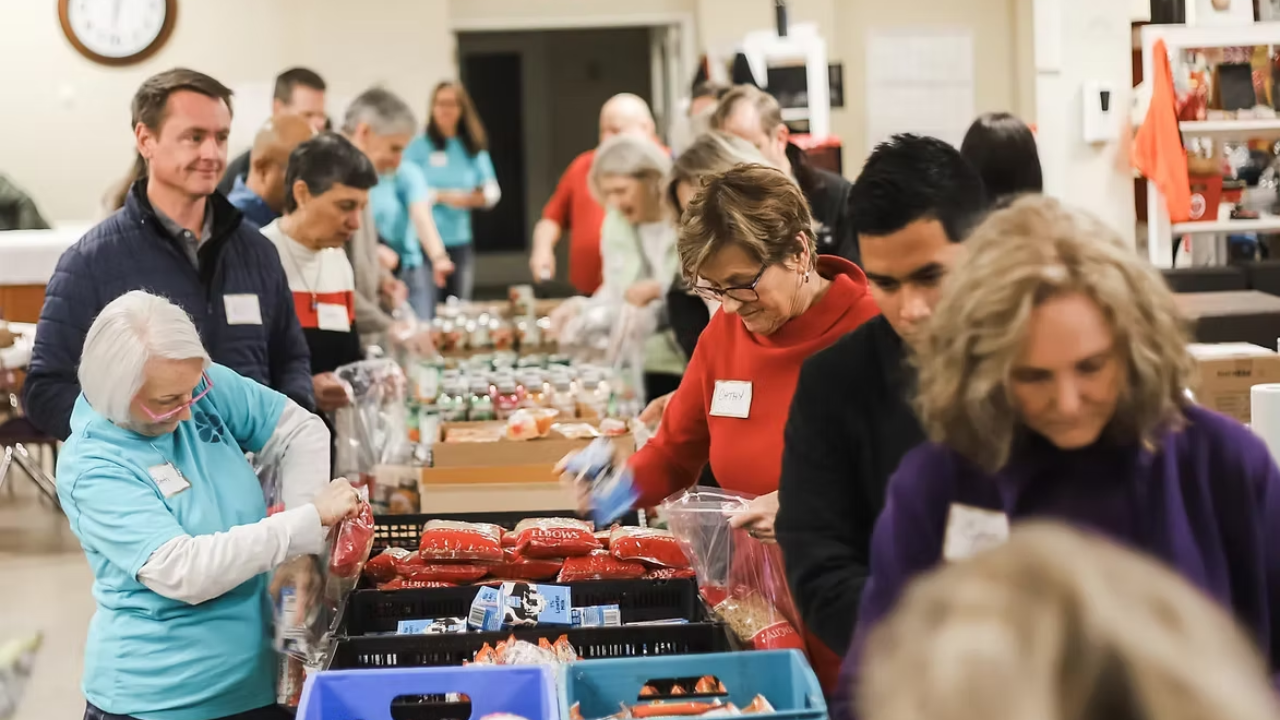
Hunger doesn't take weekends off. When the final school bell rings on Friday afternoon, millions of children wave goodbye to free breakfast and lunch programs, walking straight into a silent weekend of empty cupboards. Most people assume this happens only in remote corners of the world, but it plays out quietly right in suburban neighborhoods. Back in 2017, a small group of volunteers decided they were done looking away. They grabbed ten backpacks, filled them with nonperishable food, and handed them to kids at a single local elementary school.
What started as a modest trunk-of-the-car operation has morphed into a massive regional safety net. Founded by Ronald and Samra Robbins, Backpack Buddies of Metro Atlanta now feeds thousands of students across dozens of schools. Reaching a milestone like delivering one million meals doesn't happen by accident. It takes intense logistical coordination, dedicated community partners, and an army of volunteers willing to pack boxes week after week. If you've ever wondered how grassroots community action actually scales without losing its soul, look closely at what happened in Dunwoody. You might also find this connected article useful: Why Living Without Power On Rathlin Island Changes Everything You Know About Comfort.
The Brutal Reality of Weekend Food Insecurity
Food insecurity is rarely visible until you know what to look for. Teachers often spot the signs on Monday mornings: students who are lethargic, anxious, or unusually focused on when lunch will arrive. When a child depends entirely on school-provided meals, two days away from campus creates a dangerous nutritional gap.
Addressing this problem requires more than throwing random canned goods into a sack. Children need food they can open and eat independently without requiring complex kitchen appliances—especially if they are home alone or caretaking for younger siblings. The menu math has to work. Packing a weekend bag means balancing proteins, shelf-stable milk, single-serve fruits, and simple breakfast items. As highlighted in recent articles by The Spruce, the results are notable.
The founders realized early on that dignity matters just as much as calories. Handing a child a plastic grocery bag in front of their peers creates shame. Slipping a neatly packed, kid-friendly meal bundle directly inside a standard school backpack keeps things discreet. The kids get what they need without feeling targeted or labeled by their classmates.
Scaling Up Without Losing the Mission
Growing from 10 backpacks to feeding thousands of students across more than fifty schools requires ruthless efficiency. Organizations often crack under the pressure of rapid expansion, but Backpack Buddies solved this by building a decentralized community model.
They introduced "Community Buddies"—civic groups, religious congregations, and senior centers that adopt specific schools. These partner organizations take ownership of the heavy lifting. They raise funds, organize food drives, and help pack boxes. By distributing the workload across dozens of localized groups, the central operation avoids administrative gridlock.
Achieving official 501(c)(3) nonprofit status in 2022 accelerated this growth curve. During the 2022 to 2023 school year, the program supported roughly 800 children across 27 schools. Fast forward to the 2025 to 2026 school year, and those numbers exploded to over 2,600 children across 53 schools. Scaling at this velocity demands precise inventory tracking, constant warehouse space management, and reliable vehicle fleets to move pallets of food before distribution deadlines.
What It Actually Costs to Feed a Child
Good intentions don't pay for wholesale peanut butter or boxes of oatmeal. Running an operation of this scale comes with a clear price tag. The organization estimates that roughly $250 can sustain one child with weekend meals for an entire school year.
That figure shocks people who assume charitable feeding programs run entirely on donated surplus cans. While food drives help, they rarely provide the consistent, high-protein inventory required for balanced weekly menus. Buying shelf-stable staples in bulk requires steady financial contributions. Warehousing, sorting tables, pallet jacks, and utility bills eat up resources long before the first backpack gets zipped shut.
Corporate sponsors and individual donors keep the lights on, but the engine runs on human labor. Every Tuesday and Thursday, volunteers show up at the warehouse to sort donations, check expiration dates, and build custom packing lists tailored to each school's exact headcount.
How You Can Move the Needle Locally
You don't need to launch a massive regional nonprofit to make a dent in childhood hunger. Real change starts with localized participation.
- Audit your local schools: Reach out to school counselors or social workers to ask what specific weekend needs exist in your immediate neighborhood.
- Ditch random pantry drops: Instead of buying random items, ask food pantries what they actually lack. Usually, they need protein sources like canned tuna, chicken, or beans rather than expired holiday canned goods.
- Commit time, not just cash: Financial donations are vital, but spending two hours sorting inventory at a local packing facility gives you a firsthand look at the sheer volume required to feed a single grade level.
Hunger is a solvable problem, but it requires relentless, unglamorous execution. Ten backpacks proved that small actions can snowball into a regional movement. The only question left is what you plan to pack next.