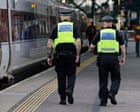
You step onto a crowded commuter train, headphones in, just trying to survive the morning rush. Five minutes later, someone is screaming abuse at the ticket collector over a delayed service. You pretend not to notice. Everyone does.
We have normalized hostility on public transit to an alarming degree. Recent data released by the Office of Rail and Road reveals that reported assaults across Great Britain’s rail network surged by a fifth in a single year, hitting a staggering record high of nearly 25,000 incidents.
It is easy to look at a headline like that, blink, and move on with your day. Don't. These numbers point to a systemic failure in how we protect frontline transit workers and everyday passengers who simply want to get from point A to point B without getting harassed, threatened, or physically hurt.
The Reality Behind the Record Numbers
Let us look at what is actually happening on the ground. According to the Office of Rail and Road (ORR), mainline railway assaults against passengers and members of the public jumped 36% in a single year to 13,464. Meanwhile, attacks on railway staff rose by 12% to 11,289 reported incidents. That breaks down to an average of roughly seven physical attacks on rail employees every single day.
Harassment cases soared by 52%, and common assaults spiked by 30%.
Why the sudden explosion? Rail operators and transport authorities argue that part of this spike is actually a good thing. They point to zero-tolerance campaigns, better data sharing, and widespread adoption of discreet tools like the British Transport Police 61016 text-to-report number. When you make it easier for people to report bad behavior, the recorded numbers go up.
But unions like the RMT and TSSA point out the obvious truth. Better reporting metrics do not explain away a cultural rot on our transport network. Rail workers are dealing with chronic understaffing, lone working conditions, and reduced visible policing presence.
Why Lone Working Is a Disaster
If you talk to anyone who actually works on the railway, they will tell you the scariest part of the job isn't the complex machinery or the weather delays. It is the isolation.
Budget cuts to the British Transport Police over recent years left massive gaps across regional and mainline routes. Train guards and station staff frequently find themselves managing platforms or carriages entirely on their own late at night. When an aggressive individual decides to pick a fight, there is no backup arriving in two minutes.
Unions have spent years pushing for an absolute ban on lone working on public transport. Yet, cost-cutting measures by operators frequently override safety concerns. Until staffing models prioritize human presence over corporate bottom lines, staff will remain vulnerable targets.
A Wider Societal Rot
Railways do not exist in a vacuum. The hostility recorded on trains mirrors a broader, uglier trend across public-facing industries in the UK.
Look at retail. The British Retail Consortium warned that violence against shop workers has reached endemic levels. Look at healthcare. Official data showed that reports of violence against NHS staff by patients surpassed 100,000.
We are dealing with a society where public patience has worn razor-thin. Post-pandemic economic pressures, rising costs of living, and a general collapse of civic decency mean that frontline workers bear the brunt of public fury. When a train is delayed due to infrastructure failure or extreme weather, the nearest employee pays the price for a corporate failure they had nothing to do with.
What Is Being Done and Why It Falls Short
The government announced a £63m funding increase for the British Transport Police intended to recruit over 200 additional officers by 2028-2029. New measures called railway behaviour notices were also rolled out to make it easier to ban repeat offenders from stations.
These are steps in the right direction. But they feel like putting a small plaster on a arterial bleed.
An extra 200 officers spread across the entire national rail network will barely scratch the surface. Furthermore, banning repeat offenders only works if station staff have the resources, time, and backing to enforce those bans consistently. Without real legal protections that treat assaults on transport workers with mandatory custodial sentences, perpetrators face minimal deterrents.
What Needs to Change Immediately
If you work on the railway or commute daily, waiting for government committees to solve this problem is a waste of time. Meaningful reform requires a radical shift in three specific areas:
- Mandatory Minimum Staffing: Put an end to single-person operations on trains and stations. A visible team approach naturally deters predatory behavior.
- Strict Legal Guardrails: Enact specific, heavy penalties for abusing public-facing transport workers, mirroring protections granted to emergency services.
- Zero Tolerance Enforcement: Train operators must stop treating abuse as "part of the job." Every single incident—verbal or physical—must result in immediate intervention and station bans.
The next time you board a train and witness someone abusing a staff member, do not just stare at your phone. Report it using text 61016. Support the staff trying to keep you moving. Because if we let the railways become lawless zones, everyone loses.