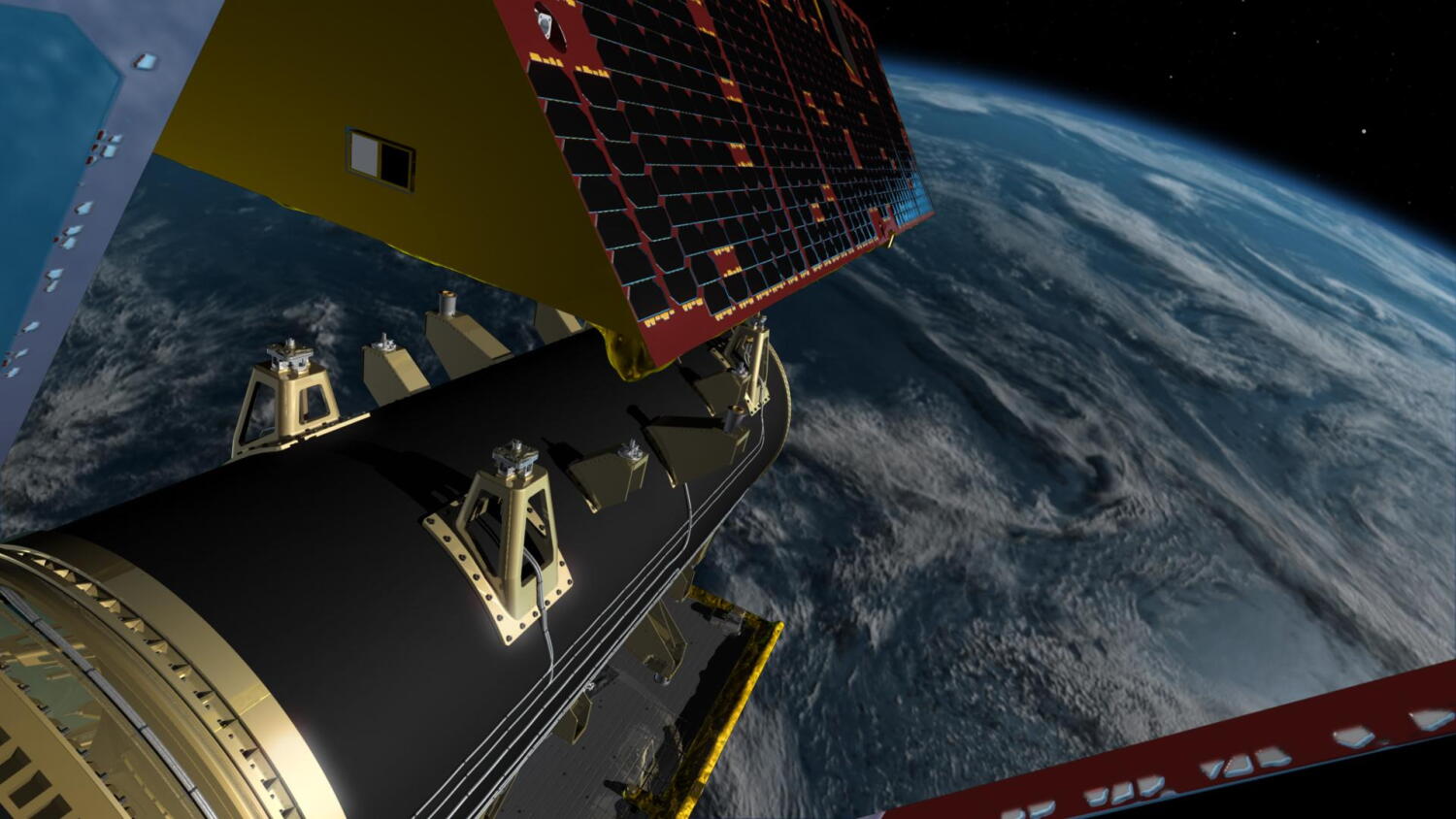
Big aerospace projects rarely finish on time or under budget. NASA's Jet Propulsion Laboratory is learning this the hard way with its latest high-stakes environmental initiative. The GRACE-Continuity mission, designed to track global water mass movements from space, is burning through its financial reserves at an alarming rate, spending more than 60 percent of its budget while facing severe roadblocks.
When infrastructure meets environmental disaster, engineering timelines collapse. The Eaton fire didn't just devastate local neighborhoods in the foothills of the San Gabriel Mountains; it dealt a direct blow to the operations and workforce powering NASA's key research centers.
The Price Tag Behind Tracking Earth's Water
NASA designed the GRACE-Continuity mission—the successor to the acclaimed Gravity Recovery and Climate Experiment satellites—to measure groundwater shifts, ice sheet melt, and global sea level changes with extreme precision. It carries a heavy price tag of roughly $658 million. Yet, financial strain has forced mission managers to confront tough realities.
Projects of this magnitude rely on a delicate web of specialized hardware, clean rooms, testing facilities, and an expert workforce. When local disasters disrupt the physical facilities where engineers assemble these sensitive instruments, delays stack up quickly. Every extra month spent troubleshooting or recovering from external disruptions drains thousands of dollars in labor and overhead costs.
How Natural Disasters Derail Aerospace Engineering
Most people assume space missions fail or go over budget because of complex software bugs or rocket engine failures. They forget about physical reality.
JPL sits right at the edge of Pasadena, nestled against the mountain terrain. When the Eaton fire swept through the region, it forced emergency closures, displaced scores of lab employees who lost homes, and halted day-to-day operations.
You can't build delicate orbital satellites remotely via Zoom. Technicians need clean rooms, precision vibration tables, and thermal vacuum chambers. When those facilities are cut off, evacuated, or dealing with power grid failures triggered by regional wildfires, timelines freeze. Fixed costs do not. Salaries, vendor contracts, and facility maintenance keep running while actual hardware progress stalls.
What Happens Next for the GRACE Successor
Budget overruns on a flagship Earth science mission trigger a ripple effect across federal science funding. When one program gobbles up extra cash to cross the finish line, other proposed initiatives often face delays or budget cuts.
NASA and its contractors are working to stabilize the timeline, but the financial buffer is thin. Keeping public faith in billion-dollar Earth observation projects requires total transparency about why these cost overruns happen. Climate tracking data remains critical for managing global droughts and floods, but building the tools to watch our changing planet is getting painfully expensive.
Protecting high-tech scientific infrastructure from climate-driven disasters requires rethinking how physical research labs handle localized emergencies. Until aerospace agencies build better operational redundancies against regional disasters, missions like GRACE-Continuity will remain vulnerable to the chaotic environment they are trying to study.