When global leaders gather at the United Nations, speeches usually blend together into a blur of diplomatic phrasing. India didn't play that game this week.
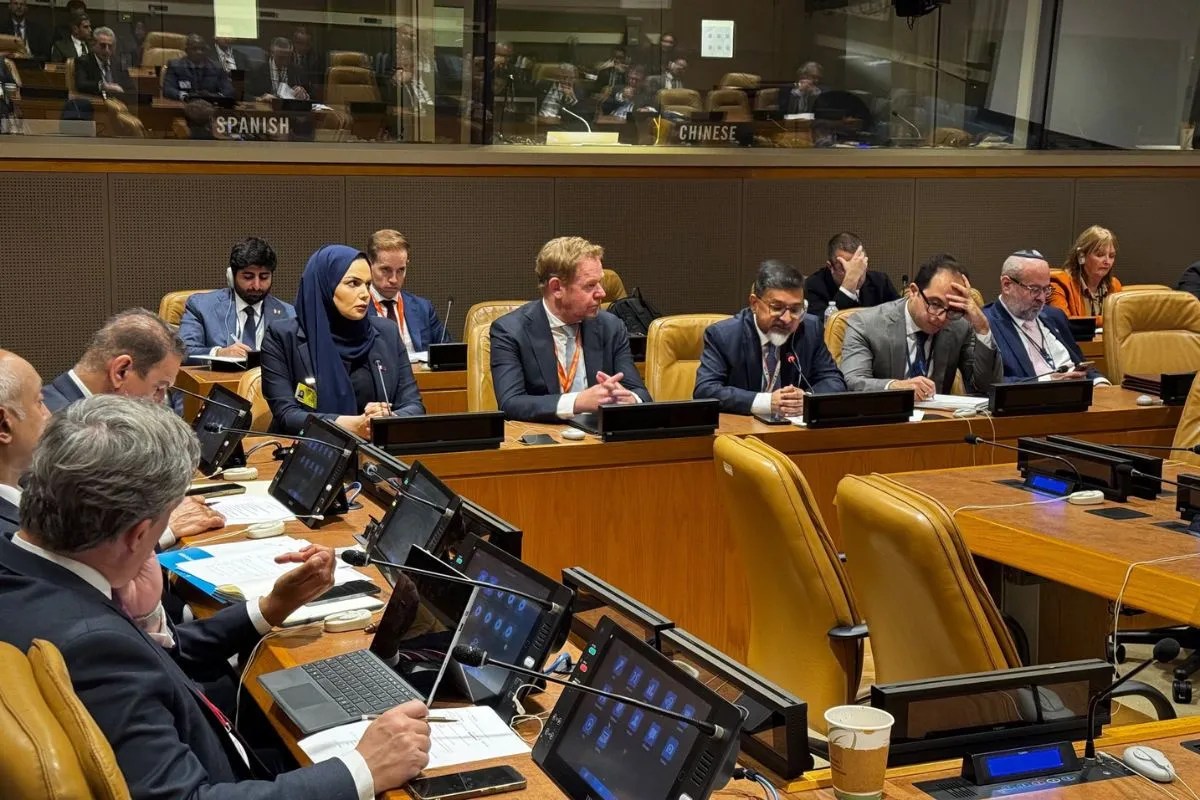
At recent high-level meetings during the UN General Assembly week, Ministry of External Affairs Secretary Sudhakar Dalela laid out a hard-hitting dual agenda. India isn't just asking for minor policy tweaks. New Delhi pushed two non-negotiable demands: absolute zero tolerance for terrorism and a complete overhaul of how the world funds climate adaptation for developing nations. Learn more on a related topic: this related article.
If you look past the headlines, these two issues share a common thread. Both require global honesty instead of empty rhetoric. Let's break down what actually happened, why India's stance matters right now, and what the international community is missing.
Putting Victims First in the Fight Against Terror
You can't talk about security while ignoring the human cost of violence. India made this clear at the 7th Ministerial Meeting of the Group of Friends of Victims of Terrorism. Further analysis by The New York Times explores comparable views on this issue.
For years, international counter-terrorism frameworks focused heavily on intelligence sharing, financial tracking, and military crackdowns. Those tools matter. But India argued that the actual victims and survivors often get pushed to the margins of the conversation.
- Keeping survivors at the center of global policy means providing long-term psychological, legal, and financial rehabilitation.
- It means rejecting double standards where nations draw lines between "good terrorists" and "bad terrorists" based on geopolitical convenience.
India's zero-tolerance policy isn't a fresh talking point. It's a direct rejection of state-sponsored terror networks that operate with impunity. When New Delhi stands up at the UN to demand stronger protections for victims, it's calling out a global system that too often treats human tragedy as collateral damage.
The Climate Finance Trap
While security dominated one half of India's agenda, climate survival drove the other. Developing countries face an impossible choice. They need to protect their populations from rising seas, unpredictable monsoons, and extreme heatwaves, but they lack the cash to do it.
India's message on climate finance was blunt. Wealthy nations love making ambitious emission-reduction pledges, but they fall short when it comes to actual delivery. Worse, climate funds are often packaged as standard loans, driving vulnerable economies deeper into debt.
- Climate finance must be additional money, not a rebranded version of regular development aid.
- Funding needs to target adaptation—like early warning systems for floods and cyclones—rather than just mitigation.
- Advanced green technology has to be accessible and affordable, not locked behind strict patents owned by Western corporations.
India isn't speaking from a place of hypocrisy here. Domestic non-fossil fuel electricity capacity has already crossed 54 percent. The country is hitting its targets. But domestic effort isn't enough when climate change respects no borders. If rich nations want global cooperation on emissions, they have to pay for the transition without crushing developing economies with predatory loans.
Why This Dual Strategy Changes the Room
Diplomacy is often about controlling the narrative. By linking counter-terrorism with climate justice, India forced the international community to confront two systemic failures at once.
Security and climate risk are deeply interconnected. Climate-induced displacement and resource scarcity create breeding grounds for radicalization and conflict. When millions lose their livelihoods to droughts or floods, extremist groups exploit that desperation.
India's interventions at the UN highlight a growing shift. Emerging economies are tired of being lectured by Western powers while bearing the brunt of security threats and climate degradation they didn't create. New Delhi is setting the terms of engagement.
Expect these demands to shape multilateral negotiations through the rest of the year. The question is whether global institutions have the political will to listen.