Maps lie. They have lied to you since grade school. When the United Nations General Assembly adopted a resolution to move away from the ancient Mercator projection toward truer representations like "Equal Earth," it wasn't just a win for geography nerds. It was a massive geopolitical power play.
For centuries, standard classroom maps have distorted reality. They bloated North America and Europe while shrinking Africa and South America. Gérard Mercator drew his famous map in 1569 to help sailors navigate oceans, not to give humanity an accurate sense of scale. Yet that 16th-century navigational tool became the default mental image of our planet, shaping generations of education, politics, and collective subconscious. Building on this theme, you can find more in: Why Protecting Tibetan Identity In Exile Is So Hard Right Now.
Maps aren't neutral. They never were. When a continent looks tiny on a map, its perceived global importance often shrinks right along with it in the public eye.
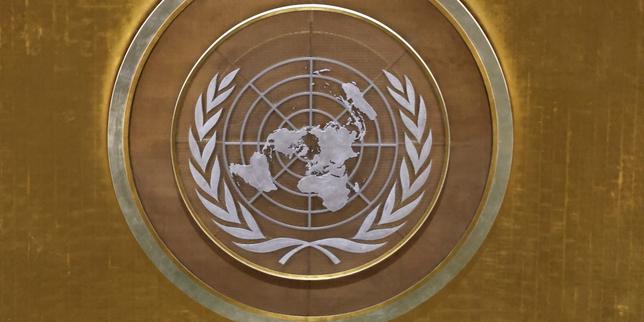
The recent UN vote didn't happen by accident. The resolution passed with 164 votes in favor, six abstentions, and only a single vote against it, cast by the United States. Spearheaded by African nations and the African Union, with backing from France and several European partners, this diplomatic shift marks a quiet reckoning over how power and space are represented on the global stage. Observers at TIME have shared their thoughts on this situation.
Breaking the Mercator Monopoly
Why did 164 countries rally behind a map change? Because symbols matter in international diplomacy.
On a classic Mercator map, Greenland looks roughly the same size as Africa. In reality, Africa is about fourteen times larger than Greenland. This staggering distortion consistently minimized the visual weight of the Global South. For decades, developing nations pushed back against cultural and political imbalances embedded in international institutions. Tackling cartography is a logical extension of that fight.
Switching toward projections like Equal Earth preserves the actual surface area proportions of continents and oceans. It strips away the Eurocentric bias that placed the old world powers front and center, literally making them look larger than life.
The Geopolitical Fault Lines
Look closely at who voted against or stepped back from the resolution, and you will see modern geopolitical tensions laid bare.
The United States stood entirely alone in voting against the text. Washington's lone opposition highlights a deep reluctance to abandon institutional norms or adjust to shifting global dynamics, even over something as seemingly academic as cartography. Meanwhile, the six abstentions came from Estonia, Georgia, Lithuania, Moldova, Serbia, and Ukraine—countries caught in complex regional security anxieties where shifts in international consensus carry immediate weight.
France and other European nations supporting the initiative signaled a calculated pivot. By backing a project driven by the African Union, European diplomacy acknowledged a changing diplomatic reality. You can't claim to partner with the Global South while clinging to a 150th-century colonial map projection that diminishes its physical stature.
What This Means For Your Daily Life
You might wonder why a map vote at Turtle Bay affects anyone outside a geography lecture hall. It changes how children learn history. It changes how media outlets frame international crises. It shifts the subtle mental biases we all carry about where economic and demographic weight actually sits on this planet.
If you are involved in global business, education, or international policy, stop treating maps as objective facts. Recognize them as tools of persuasion. When planning global logistics, educational curricula, or international outreach campaigns, pay attention to the visual framing you use.
The UN's cartographic shift reminds us that the world order isn't permanent. Every line drawn on paper or projected onto a screen is up for negotiation.